Kebetulan mr sexy fly away from Malaysia so terfikir la what if.... And what will be... What next... Hmm banyaknya fikir. And surprise my sexy read this blog. Trying so hard to keep this dirty lil secret from him.. Noty u darling

Monday, May 13, 2013
Fly with my heart
Sejak kebelakangan ni aku Selalu mimpi buruk, rasa mcm perasaan 2009 menangis dalam tidur, mimpi2 yg betul2 buat rasa bad mood and berfikir sama Ada menjadi satu kenyataan atau Tidak. Pedih hati sama Betul dgn kepedihan 2009. Haih! Another tragedy will turn me sleepy 4ever.

Sunday, May 12, 2013
Dia yang saya cintai
Sepanjang kewujudan blog ini belum sekali pn saya akui actually hati saya Sudah dirantai Oleh seseorang. Hehe Saja x Nk bg tahu.. Nk bt suprise kat orang.. Well saya dan Dia ibarat padanan yang Sangat sesuai. Walaupun terdapat beberapa factor yang mustahil bg orang lain tp kami alhamdulila berjaya la berpimpin tangan sampai skg ( perumpamaan Saja ye, reality nya en sexy saya Sangat menjaga adab). En sexy membuatkan diriku terasa begitu berharga chewaaa ...sentiasa diperlukan.. Di sayangi dan di lindungi. I just love him.. Everything is sexy on him. Even stokin pun sexy 😘

Saturday, April 20, 2013
Weekends with mommy darezz
 |
| meet Darez my bff son |
 |
| Darezz give aunty sexy smiling pls |
Tuesday, November 13, 2012
Alone
dah lama rasanya x outing.. last outing tembak sana-sini awal tahun nie.. itu pun sebab terpaksa. aih tak sanggup rasanya nak berjemur bak ikan kering di tengah panas. Tambahan pulak sejak dua menjak ni cuaca x menentu. kang x pasal2 aku kena p service bf nikon aku nie. aah kamera murah je, murah-murah pun jenuh kumpul duit nak beli tau. Kalau bukan sb gatal nak melibatkan diri pameran Zirkon ni jangan harap aku nak stay menghadap sang suria.. menyengat kulit2 ku bak kulit buaya nie kannnn. sebelum bertolak aku dah plan beberapa perkara.. yelah untuk menunaikan hasrat BFF aku nak kan jam yang ala-ala ORI gitu.
sewaktu menunggu en driver bas sempat juga aku berposing dengan this meow, muka die kerek giler la... blh plk time aku belai die.. meow ni blh golek2 gedik nak menarik perhatian aku kan.. eee comelnya. tgk la binatang bulu-bulu nie
sebaik je tapak kaki ni menjejak KL station berikutnya aku nak ke CHOW KIT naik Monorail.. huhhuuhuhuuhuh sebenarnya Chow Kit nie tempat yang menarik.. if korang ada hati nak ke jakarta x payah susah2 nak beli tambang kapal terbang. Naik kancil pon boleh... datang la kat sini. Chow kit banyak tempat yang hebat.. barang die murah2 mayb sb peniaga kat sini lebih kepada belian secara pukal. tahu apa tu pukal? pukal bermaksud Borong yeeee.... so sesiapa yang nak buat jualan kecil2an boleh datang kat sini.. kalau nak tahu kat mana kenalah rajin2 bertanya akak... :) saya laaa....


sewaktu menunggu en driver bas sempat juga aku berposing dengan this meow, muka die kerek giler la... blh plk time aku belai die.. meow ni blh golek2 gedik nak menarik perhatian aku kan.. eee comelnya. tgk la binatang bulu-bulu nie
 |
| MEOW TOMPOK2 COMOT NI SPORTING KANN |
 |
| TAMBANG BAS DARI SHAH ALAM KE KL SENTRAL RM 2.50 IF NAK KE CM (PASAR SENI) RM 3.00 |
 |
| CANTIK |
 |
| MEH CARI CEPAT ZERO DEFECT |
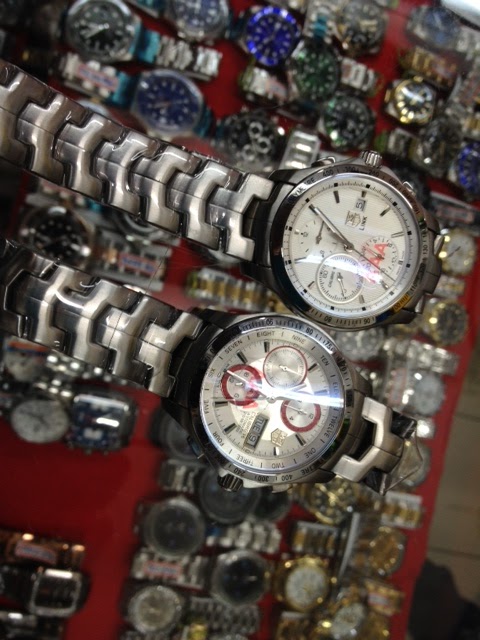 |
| GRED AAA ( SEBIJIK MACAM ORI ) |
di sebabkan misi utama aku pada hari itu adalah untuk mengumpul dan mendokumentasikan bahan, maka aku pun mengambil keputusan untuk berjalan kaki... yelah kalau nak mendapatkan view yang menarik haruslah berkorban untuk menapak dari chow kit ke KLCC kan. alhamdulila boleh tahan jauh gak perjalann aku, sampai perut bergendang riang, agaknya cacing kat dalam tu sedang bersamba dan berpoco-poco. setelah 30 minit berlalu akhirnya aku jumpa satu tempat makan yang baik punya, baik dari segi harga dan juga kuantiti.. ni dia laman seni :)
 |
| MAKAN BERLATARKAN KLCC BEST JUGA. |
 |
| CAN U SEE ME? |
setengah jam berlalu di meja makan kini perjalanan harus di teruskan .. laman KLCC menjadi misi utama. elok sangatlah kan ye la, baru sebentar tadi menternak lemak kini tiba masa mengorbankanya pulak. :) cara yang paling mulia abad ini.


Wednesday, October 10, 2012
Pinhole Camera
•pinhole camera also
known as camera Obscura,
or "dark
chamber", is
a simple optical imaging device in the shape of a closed box or
chamber. In one of its sides is a small hole which, via
the rectilinear propagation of light, creates an image of
the outside space on the opposite side of the box.
•Images created via a small opening will be found in
the natural environment and in everyday life, and people in various parts
of the world have been observing them since ancient times. Probably
the earliest surviving description of this kind of observation dates from
the 5th century BC, written by Chinese philosopher Mo Ti.
•The Western hemisphere, Aristotle in 4 BC was
asking, without receiving any satisfactory answer, why sunlight passing through
quadrilaterals, for example, one of the holes in wickerwork, does not
create an angled image, but a round one instead, and why
the image of the solar eclipse passing through a sieve,
the leaves of a tree or the gaps between crossed fingers creates
a crescent on the ground.
•10 AD the Arabian physicist and mathematician Ibn al-Haitham, known as Alhazen, studied
the reverse image formed by a tiny hole and indicated
the rectilinear propagation of light.
•The another scholar during the Middle Ages who was
familiar with the principle of the camera obscura, namely
the English monk, philosopher and scientist Roger Bacon. It was not until
the manuscript Codex atlanticus (c. 1485) that the first detailed description
of the pinhole camera was set down by Italian artist and inventor Leonardo
da Vinci, who used it to
study perspective.
 |
Principle of a pinhole camera. Light rays from an object
pass through a small hole to form an image.
|
•The camera Obscura was, in fact,
a room where the image was projected onto one of the walls
through an opening in the opposite wall. It was used to observe
the solar eclipse and to examine the laws of projection. It later
became a portable instrument which was perfected with a converging
lens. Instruments of this kind were often used as drawing aids and, at
the dawn of photographic history, they formed the basis for
the construction of the camera.
•During
the mid-20th century scientists discovered that it could be used to
photograph X-ray radiation and gamma rays, which the ordinary lens
absorbs.
•1850 the first
photograph taken with a pinhole camera was the work of Scottish
scientist Sir David Brewster the technique became more established in
photography during the late 19th century when it was noted for
the soft outlines it produced, as opposed to lenses generating perfect,
sharp images.
- The image in the pinhole camera is created on the basis of the rectilinear propagation of light. Each point on the surface of an illuminated object reflects rays of light in all directions. The hole lets through a certain number of these rays which continue on their course until they meet the projection plane where they produce a reverse image of the object. Thus the point is not reproduced as a point, but as a small disc, resulting in an image which is slightly out of focus. This description would suggest that the smaller the hole, the sharper the image. The calculations for the optimal diameter of the hole in order to achieve the sharpest possible image were first proposed by Josef Petzval and later perfected by British Nobel prizewinner Lord Rayleigh. He published the formula in his book Nature in 1891.
•The image created by
a pinhole camera has certain characteristics. Since the process
entails a central projection, the images in the pinhole camera
are rendered in ideal perspective.
•Another special
characteristic is the infinite depth of field which, in a single
photograph, allows objects to be captured with equal sharpness whether they are
very close up or far away.
•The pinhole camera
takes in an extremely wide angle. The rays of light, however, take
much longer to reach the edges of the negative than the centre,
thus the picture is less exposed along the edges and therefore darkens.
•The disadvantage of
the pinhole camera is the amount of light allowed through (small
aperture), which complicates and sometimes prevents entirely
the photographing of moving subjects. Exposure time is normally counted in
seconds or minutes but, in bad lighting conditions, this could be hours or even
days

Tuesday, October 9, 2012
HISTORICAL TIMELINE PHOTOGRAPHY
1725 Johann Henrich schulze discover
silver nitrate darkens when exposed to light
1827 Joseph Nicephore Niepce create View from the window at le gras. Heligroph
1829
Louis Jacques Mande Dagurre
partners with Nicephore Niepce
1835
Dagurre discover latent
image
1839 Dagurre announces Dagurreotype in France to the Academie de Sciences
William Henry Fox Talbot announces calotype
in England
1940-50 Anna Atkins produces cyanotype prints of algae specimens
bound as editions
1842
Talbot published pencil of nature
2843 David Octavius Hill & Robert
Adamson collaborate to produce calotype portraits of Scottish gentry.
1847 Talbot’s calotype process is
improved by Louis Desire Blanquart-Evrand
1849
Gustave LeGray creates
waxed-paper process in France
1850 Frederick Scott Archer invents
collodion process ( also known as wet- plate process)
L. D. Blanquart – Evard introduces
albumen printing paper.
1851 First photograph using electric
spark for illumination by W. H. F. Tablot Ambrotypes invented by Frederick
Scott Archer.
1853 Tintype process invented – most
common usage during Civil War
1854 Improvments to ambrotype made by
James Ambrose Cutting and patented in U.S. Andre Disderi introduce Carte
–de-visite.
1855 Roger Fenton photographs Crimean
War, Valley of the Shadow of death.
1857 Oscar Gustave Rejlander exhibit
combination print in two ways of life
1861 Nadar ( Felix Tournachon) make 1st photograph using
artificial light under ground cave
1861-64
Matthew Brady introduces
photographic documentation of Civil War
1863 Timothy O’Sullivan photographs
Civil War, A Harvest of Death, Gettysburg ,
Pennsylvania
1863-75
Julia Margaret Cameron photographs
family and friends
1865-80 Era of western photography ( William
Henry Jackson, Eadweard Muybridge, Timothy O’Sullivan and Carleton E.Watkins)
1868
Thomas Annan begins
documenting slum of Glasgow
1869 Henry Peach Robinson established
pictorial effect in photography for aesthetic photographs
1871 Dry-plate announced by Richard
Leach Maddox, but not perfected until 1878
1871-87 Muybridge established work on animal
locomotion, a study in human movement
1880
Halftone reproduction
appears in New York
1883-90 George Eastman introduce small camera
using roll film interest in street life and snapshot photography emerges
1884 Thomas Eakins studies time and
movement in photography, History a Jump
1888-90 Jacob Riis documents New York
1889 Peter Henry Emerson establish
Naturalistic Photography which challenges philosophy of Henry Peach Robinson’s
pictorial effect
1890- 1910 Pictroialist art movement in photography (
The Linked Ring, Photo-Club de Paris, Kleeblat, Photo –Secession),
1895
Alice Austin records
domestic life, Hester Street Egg Stand.
1898
Eugene
Atget begins photographing Paris
1899
Clarence H. White, The Ring Toss
1900
Gertrude Kasebier, Blessed Art Thou Among Women
1900-06 Edward S. Curtiws photograph North
American Indians The Vanishing Race, 1904.
1903
Art journal, Camera Work,
founded in U.S by Alfred Stieglitz.
1904 Lewis Hine begins work as social
Photographer documenting child labor. Lumier Brothers invent Autochrome for
color photographs.
1905 Alfred Stieglitz opens Little
Gallery of Photo-Secession at 291 fifth Avenue New York ,
U. S.
1907 Alfred Stieglitz, The Steerage.
1911-12 Futurism – experiments in Photodynamism
by Bragaglia brothers in Italy
1914- 42 Clarence White’s School
of Photography opens in New York , the only school U.S.
1915 Alvin
1916 James VanDerZee open studio in Harlem , Couple in
Racoon Coast (1929).
1919-28 Bauhaus is estabilished in Germany
1920 Experiment with photo collage and
photo montage as part of Dada & Surrealist movements.
1923
Hannah Hoch, The Cut of Kitchen knife, montage.
1924 35mm Leica camera using
inexpensive standard movie stock film invented by Oscar Barnack of Leitz
Company.
1929 August Sander publishes Anlitz Der
Zeit ( Face of Our Time), a compilation of work begun in 1910 depicting
individuals and groups from all class in Germany
1930 – 40 f/64 group established. Photographers
include Edward Weston, Ansel Adam and
Imogen Cunningham.
Ansel Adams and Fred Archer develop The Zone System
1930
Edward Weston, Pepper
1932
Henri Cartier – Bresson – The Decisive Moment
1935 -42 Farm Security Administration established
an extensive documentary project in U.S. Photographers include Dorthea Lange,
Walker Evans, Marion Post Wolcott, Russell Lee, Ben Shahn.
1936 The Photo League founded New York City
1940 Museum of Modern Art
1948 W. Eugene Smith photo essay, Country Doctor, appears in Life Magazine.
1955 Family of man exhibition at Museum of Modern Art
Roy
DeCarava, The sweet of Life,
a collaboration wi9th writer Langston Hughes about life in harlem
1958
Robert Frank, The Americans
1960-70s Photographer begin emphasizing social
urban landscape: Garry Winogrand, Lee
Friedlander, Diane Arbus, Bruce Davidson, Danny Lyon.
Duane Michals produce sequential
images presentating time lapse as narrative Jerry Uelsmann creates complex
multi-image allegories
Ralph Eugene Meatyards create
fictional narrative to revel psychological conditions in documentary style 1967
Friends of Photography established by
Ansel Adams and Beaumont and Nancy Newhall.
1970-80
Larry Clarck, Tulsa
Bill Owen , Suburbia
Johnathan Green, The snapshot, examines aesthetic of snapshot and relation-ship to
contemporary photography.
1977-79 Rephotographic Survey Project formed by
Mark Klett, Ellen Manchester, JoAnn Verburg, Gordon bushaw and Rick Dingus to
rephotograph 19th century west-ern survey site
1978-79
Cindy Sherman, Untitled Film Stills.
1980 -90 Richard Prince challenges advertising
imagery by photographing and cropping images found in magazines (
postmodernists call this appropriation)
Barbara Kruger challenge media and
stereotypes with billboard size imagery incorporating text, Untitled (Your Body
Is A Battleground)
Sandy Skoglund create room-size
installations, then photographs them for final image, Revenge of the Goldfish, 1981
Nancy Burson, Richard Carling, and
david Kramlich use digital imaging to construct a portrait using imagery from
several different individual portraits, Mankind.
1990- 2000 Photographers explore multiculturalism and
identity Sally Mann challenges photographic art and parenthood in Immediate family
Carrie Mae Weems exmines myth and
religion in African – American history
Clarissa Sligh investigate snapshots
to discover differences between memory and picture
Timeline information extracted from World history of Photography by Naomi Rosenburg
Seizing
the Light, A history of Photography
, by Robert Hirsch
M, Joy (2004). Exploring Basic Black
& White Photography, New York: Thomson Delmar Learning Publishing.
Friday, August 3, 2012
confident 1 juta
Teringat kenangan dolu2 masa berbuka pose dengan Cik Mas my bff since diploma Lagi. Ye la semua pn sedia maklum Kalau time pose ni Iklan minuman kt tv semuanya agak mengugat iman. Nk di jadi kan cerita setelah Aku dgn Cik mas penat berjalan2 kt bazaar Ramadan Akhirnya kmi selesai bertawaf beli makanan.
Blk rumah je Terus duduk kt atas sofa .. Ya Allah penatnya Kalau Nk cerita pasal haus memang tak terkata.. Tekak ni kering kontang. Di sebabkan Cik Mas sayang Aku lebih die Pn prepare la Judah Nk Buka pose.. Air cincau + soya bean. Wah memang terliur la time tu kn...lagi2 tgk air tu McM melambai2 meh la minum kami.. Tetiba Azan berkumandang wah apa lg Aku dgn Cik mas pin tibai la minuman tu on sekali Lagi Azan Iklan rupanya.... Jahatnya Iklan tuuu
Blk rumah je Terus duduk kt atas sofa .. Ya Allah penatnya Kalau Nk cerita pasal haus memang tak terkata.. Tekak ni kering kontang. Di sebabkan Cik Mas sayang Aku lebih die Pn prepare la Judah Nk Buka pose.. Air cincau + soya bean. Wah memang terliur la time tu kn...lagi2 tgk air tu McM melambai2 meh la minum kami.. Tetiba Azan berkumandang wah apa lg Aku dgn Cik mas pin tibai la minuman tu on sekali Lagi Azan Iklan rupanya.... Jahatnya Iklan tuuu
Subscribe to:
Posts (Atom)